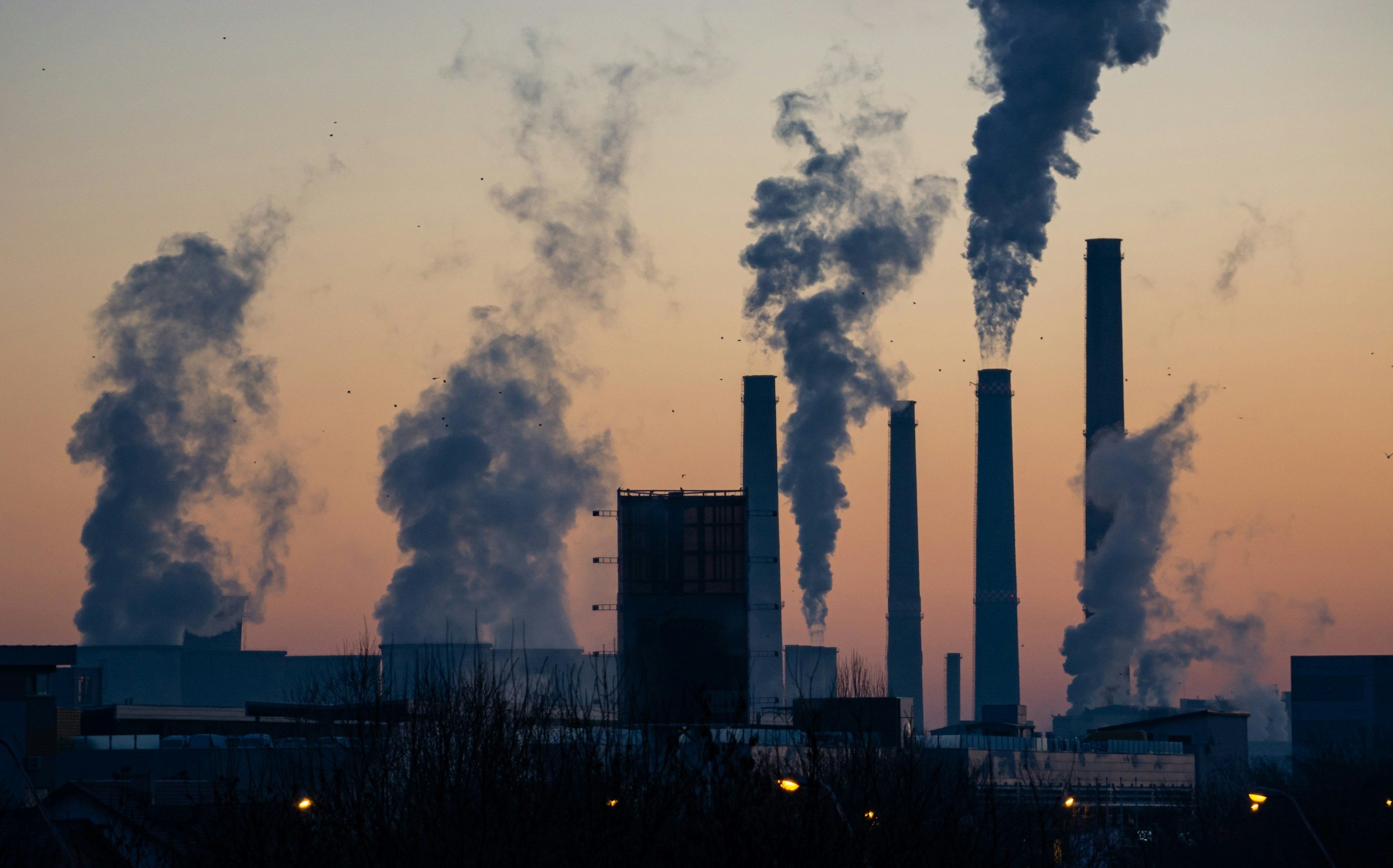
“That white plume is mostly water vapor… but don’t confuse ‘visible’ with ‘clean.’ The real pollution story is upstream.” Photos by unsplash.com
Venezuela’s “Dirty Oil” and the Clean-Energy Lip Service
(Is it Really a Global Issue?)
Once again I found myself scrolling the Yahoo funny pages and stumbled into an article about Venezuela’s “dirty oil.” I had to chuckle at the wording.
“Dirty oil.”
Well… last I checked, it’s all dirty. Some of it’s just dirtier, and some of it’s dirtier and harder to deal with. And if by “dirty” they mean “corrupt,” then yeah—oil’s been guilty of that one in more countries than I can count.
What they usually mean is oil that’s extra heavy and sour—thick as syrup and loaded with sulfur and other junk that takes more work to process. Venezuela’s Orinoco Belt is famous for extra-heavy crude in the neighborhood of 7–13° API gravity, which is basically “this stuff doesn’t want to move unless you convince it.”
And that’s where this story begins.
“So why can’t we just mix the nasty stuff with the cleaner stuff?”
We can—and we do—but not in the way most people think.
There are two different problems people mash together:
Getting heavy oil to flow (out of the ground, through pipes, onto a ship)
Meeting fuel standards (diesel, gasoline, jet fuel) that require low sulfur
For problem #1, yes—heavy crude often gets blended/diluted with lighter hydrocarbons so it’ll move through pipelines and equipment. That’s normal in heavy-oil land.
But for problem #2… blending doesn’t magically make the sulfur disappear. It just averages the mess. You can reduce the “dirt” some, but if you want fuels that meet modern standards, that sulfur still has to come out in the refinery—and that takes real processing.
So the honest answer is: Blending helps it flow. Refining is what makes it “cleaner.”
“They said natural gas is a potent greenhouse gas.”
Yeah. Duh.
Natural gas is mostly methane, and methane is a problem gas. It doesn’t hang around as long as CO₂, but it hits harder while it’s here.
Here’s the part that makes people mad: natural gas can be both “cleaner” and “not clean.”
It burns cleaner than coal for electricity generation—so on paper, it looks like a step in the right direction. But if methane leaks during drilling, processing, or transport, it can erase a chunk of that benefit. That’s why people argue about it like it’s religion.
Where does the line get drawn?
Now we’re in the part nobody wants to say out loud.
Venezuela’s oil revenue could help rebuild infrastructure. But “helping rebuild” and “doing it responsibly” are not automatically the same thing. When infrastructure is crumbling, you get more spills, more flaring, more leakage, and more chaos—because the system is literally falling apart.
Here’s another piece people ignore: rebuilding costs real money. And if the rebuild money doesn’t come from that country’s revenue, it’s coming from somewhere else—usually taxpayers or debt. (That’s dollars, not pennies — and it should tick you off.)
Official daily total (U.S. Treasury “Debt to the Penny”):
And I’m gonna be blunt: I’m not interested in watching my own country dig a deeper debt hole to “help rebuild” a place that doesn’t want our help, doesn’t trust it, and sometimes outright resents it. Call it harsh if you want, but I call it reality.
So the honest questions are: who pays, who benefits, and who’s accountable when it gets wasted?
And here’s the hypocrisy:
If the harm happens “over there,” people suddenly get real brave. Digging holes in somebody else’s backyard is still digging holes.
We’ve got folks screaming about mining, drilling, pipelines, refineries—then quietly importing the same mess from somewhere else so they can keep their hands clean and their lifestyle unchanged.
That’s not environmental virtue. That’s outsourced guilt.
“If electric is cleaner, why does nobody talk about how the electricity is made?”
Exactly.
Electric isn’t a fuel. It’s a delivery system. And it’s only as “clean” as the grid feeding it.
So when someone says “EVs are clean,” the correct response is:
“Where do you live, and what’s your grid mix?”
Because “clean energy” doesn’t mean much if we’re playing hide-the-smokestack.
The part that bugs me
Look, I’m not here to pretend oil is good for the planet. It isn’t. I’m also not here to pretend we can power an 8-billion-person world on slogans and wishful thinking.
Heavy crude is harder to move, harder to refine, and harder on equipment. Natural gas can be “cleaner” than coal in one column and still be a problem in another—especially if it’s leaking. Electric can be cleaner too, but only if we stop pretending production doesn’t count.
And here’s the part that bugs me most: a lot of people don’t want a cleaner world—they want a clean conscience. If the digging, drilling, mining, and pollution happen “over there,” suddenly it’s acceptable. That’s not environmental leadership. That’s just outsourced guilt with a shiny label.
So maybe the line gets drawn here: stop arguing like it’s team sports and start demanding honesty in the full equation. If we’re going to call something “clean,” we count the whole chain. If we’re going to criticize another country’s mess, we don’t pretend we’re not buying into it.
Because if it isn’t in our yard… it’s still in our world.
A lot of folks don’t realize what’s really making their lives “easier” and “modern.” I’ve fallen for it too.
What’s one realistic change you’d make that improves your health and the environment?